
4 Best Sunscreens for Acne-Prone Skin
Disclaimer: This post contains affiliate links. If you purchase through these links, Glarixy may earn a small commission at no extra cost to you.
Finding a sunscreen when you have acne-prone skin often feels like a risky gamble. Many traditional sunscreens are notorious for clogging pores, triggering painful breakouts, and leaving a greasy shine or chalky white cast. However, skipping SPF is one of the worst mistakes you can make for acne. Unprotected UV exposure darkens post-acne marks (post-inflammatory hyperpigmentation), worsens inflammation, and breaks down your skin’s collagen barrier.
Dermatologist Insight: According to board-certified dermatologist Dr. Andrea Suarez, MD, FAAD, skipping sunscreen when dealing with active breakouts is counterproductive. UV radiation increases skin inflammation, which darkens post-acne marks (PIH) and delays healing. Rather than avoiding SPF, she advises choosing lightweight, oil-free, non-comedogenic formulas.
The key is choosing a dermatologist-tested, non-comedogenic, oil-free sunscreen specifically formulated for acne-prone and sensitive skin. In this guide, we review 4 top-rated sunscreens that protect your skin barrier while keeping breakouts at bay.
At a Glance: Top SPFs for Acne-Prone Skin
| Sunscreen | Key Ingredients | Finish / Texture | Best For |
| EltaMD UV Clear Broad-Spectrum SPF 46 | Zinc Oxide, Niacinamide, Hyaluronic Acid | Lightweight, Silky Finish | Sensitive, Redness & Acne-Prone Skin |
| La Roche-Posay Anthelios Clear Skin Dry Touch SPF 60 | Cell-Ox Shield, Perlite & Silica | Matte, Dry-Touch | Oily Skin & High Humidity Days |
| Beauty of Joseon Relief Sun (Rice + Probiotics) SPF 50+ | Rice Extract (30%), Grain Probiotics | Hydrating, Dewy Glow | Dry/Dehydrated Acne-Prone Skin |
Detailed Reviews: The 4 Best Sunscreens for Acne-Prone Skin
1. EltaMD UV Clear Broad-Spectrum SPF 46
The Ultimate Dermatologist Favorite

EltaMD UV Clear is universally acclaimed by dermatologists for acne-prone and rosacea-prone skin. Its oil-free, lightweight formula utilizes transparent Zinc Oxide to provide powerful broad-spectrum UVA/UVB protection without clogging pores or feeling heavy.
What sets this sunscreen apart is its inclusion of 5% high-purity Niacinamide (Vitamin B3). Niacinamide actively calms inflammation, reduces redness associated with active breakouts, and helps fade dark acne spots over time. Combined with Hyaluronic Acid for oil-free hydration, it leaves skin feeling silky smooth.
Dermatologist Insight: According According to Dr. Joshua Zeichner, MD, FAAD (Director of Cosmetic & Clinical Research in Dermatology at Mount Sinai Hospital), formulas like EltaMD UV Clear are particularly effective for acne-prone skin because the 5% high-purity niacinamide actively calms inflammation, reduces redness, and helps prevent post-acne marks from darkening under UV exposure.
- Pros: Contains Niacinamide to soothe redness; completely non-comedogenic; leaves no white cast; glides effortlessly under makeup.
- Cons: Higher price point compared to drugstore options.
2. La Roche-Posay Anthelios Clear Skin Dry Touch Sunscreen SPF 60
Best Oil-Control & Matte Finish
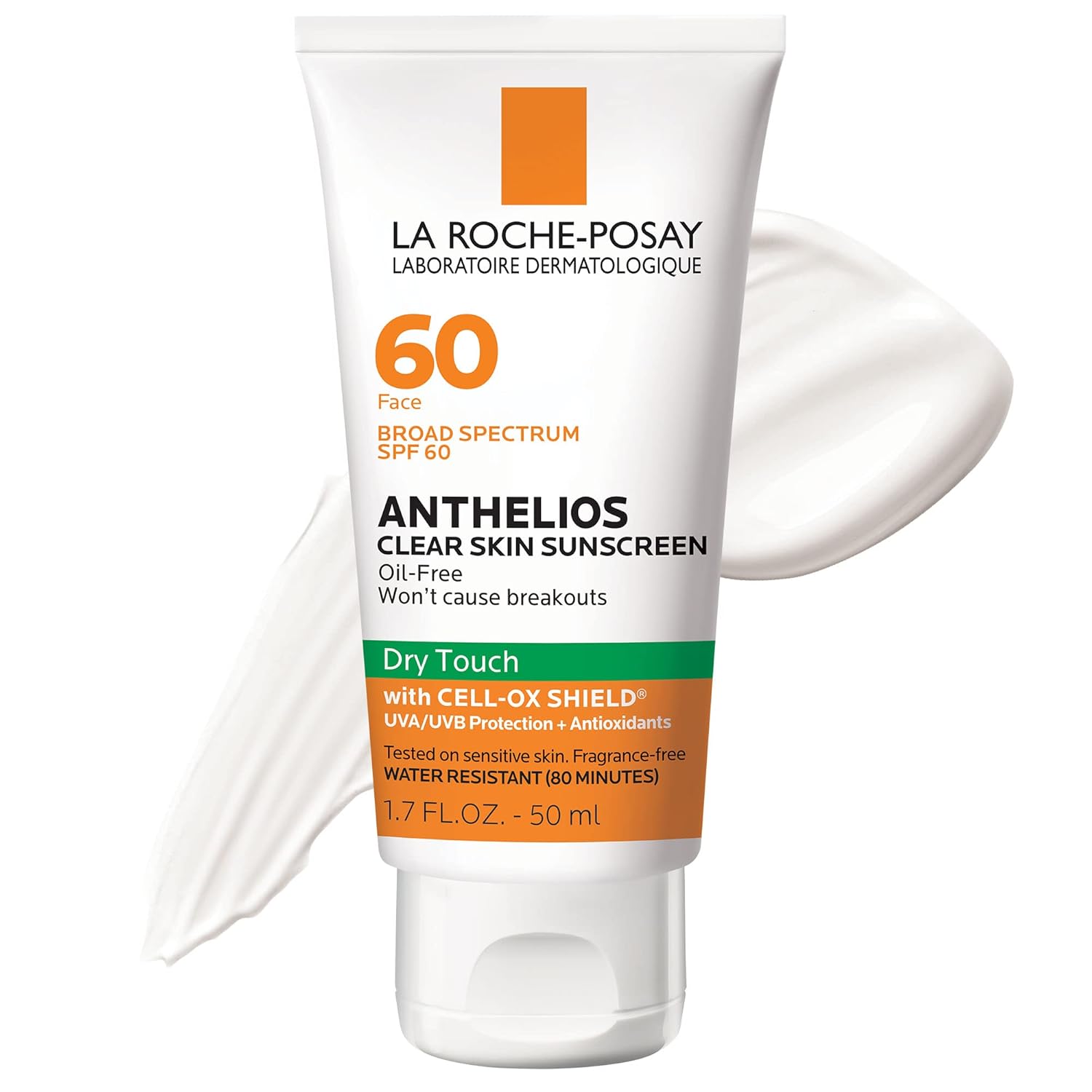
If your skin turns into a shiny oil slick within hours of applying sunscreen, La Roche-Posay Anthelios Clear Skin is engineered specifically for you. Formulated with a unique dual-absorption technology (Perlite and Silica), it actively absorbs excess sebum and sweat throughout the day, even in intense summer heat and high humidity.
It provides heavy-duty SPF 60 broad-spectrum protection while staying 100% oil-free, fragrance-free, and paraben-free. It settles into a clean, dry-touch matte finish that prevents shiny buildup
Dermatologist Insight: According to Dr. Hadley King, MD, FAAD (Clinical Instructor of Dermatology at Cornell University), sunscreens containing silica or starch minerals are particularly effective for oily and breakout-prone skin in warm climates. These ingredients physically absorb excess sebum as it is produced throughout the day, controlling greasy shine without clogging pore openings.
- Pros: Superior oil control; dry-touch matte finish; 100% oil-free; highly water-resistant (80 minutes).
- Cons: Needs to be blended quickly as it dries fast upon application.
3. Beauty of Joseon Relief Sun: Rice + Probiotics SPF 50+ PA++++
Best Hydrating & Soothing Formula for Sensitive Acne Skin

For those dealing with dry, inflamed acne skin caused by harsh treatments like Salicylic Acid, Benzoyl Peroxide, or Retinoids, traditional matte sunscreens can accentuate flakiness. Beauty of Joseon Relief Sun offers a soothing, barrier-repairing solution inspired by K-beauty innovation.
Enriched with 30% Rice Extract and Grain Fermented Probiotics, this sunscreen deeply hydrates, restores the skin microbiome, and soothes irritated skin without feeling heavy or greasy. It blends effortlessly like a lightweight lotion and leaves zero white cast on all skin tones.
Dermatologist Insight: According to Dr. Jenny Liu, MD, FAAD (Board-Certified Dermatologist & Adjunct Assistant Professor), sunscreens containing fermented ingredients and lightweight botanicals are ideal when acne treatments compromise the skin barrier. These ingredients soothe inflammation and rebuild moisture levels without adding heavy, pore-clogging lipids that aggravate breakouts.
- Pros: Deeply hydrating and soothing; strengthens the skin barrier; no white cast; highly affordable.
- Cons: May feel too moisturizing for extremely oily skin in humid climates.
4. Paula’s Choice Clear Ultra-Light Daily Hydrating Fluid SPF 30
Best Weightless Water Texture for Enlarged Pores
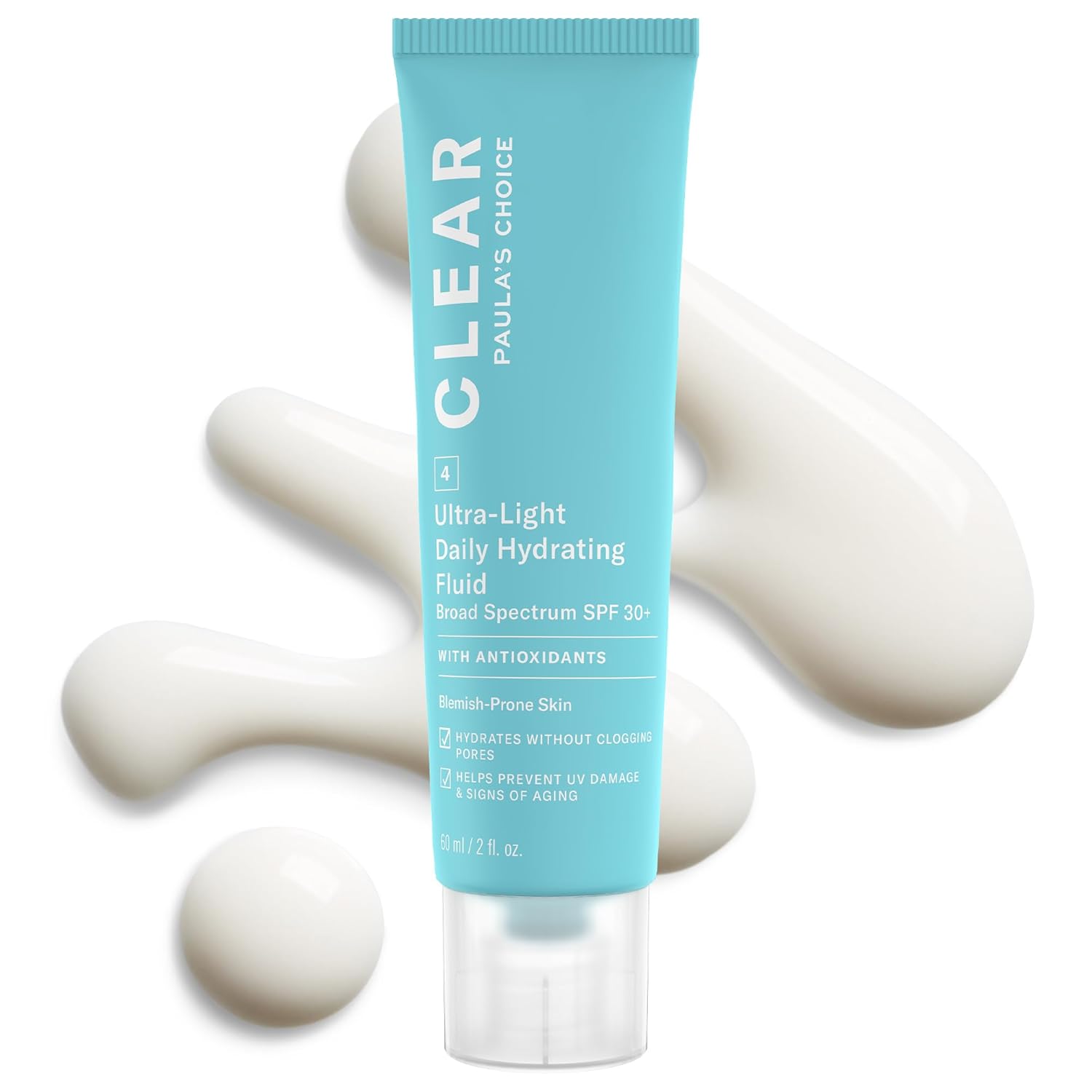
Paula’s Choice CLEAR line is formulated specifically to target breakouts, and this sunscreen lives up to the reputation. Featuring a water-light, fluid texture, it feels practically invisible on the skin while providing reliable broad-spectrum protection.
Packed with potent antioxidants such as Green Tea Extract, Chamomile, and Elderberry, it actively neutralizes environmental stressors, minimizes pore visibility, and calms acne-induced inflammation without leaving any greasy residue.
- Pros: Ultra-lightweight liquid texture; minimizes the look of enlarged pores; packed with soothing antioxidants.
- Cons: SPF 30 (may require more frequent reapplication if spending all day in direct sunlight).
How to Choose the Right Sunscreen for Acne-Prone Skin
When shopping for sunscreen for acne-prone skin, dermatologists advise looking for the following key labels:
- Non-Comedogenic: Ensures the formulation has been clinically tested not to clog pores or cause comedones (blackheads and whiteheads).
- Oil-Free Formula: Prevents adding extra fat or lipids to already sebum-heavy skin.
- Active Soothing Ingredients: Look for ingredients like Niacinamide, Zinc Oxide, Centella Asiatica, or Green Tea to calm redness and inflammation.
- Broad-Spectrum Protection: Protects against both UVA rays (aging/dark spots) and UVB rays (burning).
Frequently Asked Questions (FAQ)
1. Does sunscreen cause acne?
Sunscreen itself does not cause acne. Breakouts usually happen when using heavy, comedogenic formulations containing thick oils or silicones, or when sunscreen is not properly cleansed off at the end of the day. Double cleansing with a gentle face wash easily prevents this.
2. Is mineral or chemical sunscreen better for acne?
Both can work exceptionally well if formulated properly. Mineral sunscreens (Zinc Oxide/Titanium Dioxide) are naturally anti-inflammatory and sit on top of the skin, making them ideal for sensitive, inflamed acne. Modern fluid chemical sunscreens are often lighter and leave zero white cast.
3. How do I prevent sunscreen from piling or rolling off under makeup?
Pilling usually happens when you apply makeup too quickly over sunscreen, or when you layer oil-based and water-based products together. To avoid this:
- Apply your sunscreen and wait 3 to 5 minutes for it to fully set into the skin before applying foundation or concealer.
- Choose lightweight, fluid formulas like EltaMD UV Clear or Paula’s Choice CLEAR Fluid, which function seamlessly as makeup primers.
4. How much sunscreen should I apply to my face?
To achieve the full SPF protection stated on the bottle, dermatologists recommend applying approximately two finger-lengths (a strip of sunscreen along your index and middle fingers) or about 1/4 teaspoon for your entire face and neck.
5. Why does my acne look worse after a day in the sun without SPF?
While UV exposure might temporarily dry out surface pimples (giving a false impression that acne is clearing), it actually damages the skin barrier, triggers excess oil production to compensate, and darkens post-acne marks (post-inflammatory hyperpigmentation). Unprotected sun exposure prolongs acne healing significantly.
6. Do I need to double cleanse to remove sunscreen at night?
Yes, especially if you wear water-resistant or matte oil-control sunscreens (like La Roche-Posay Anthelios). Using a gentle micellar water or oil cleanser first, followed by your regular water-based face wash, ensures all SPF residue and trapped sebum are completely cleared from your pores overnight.
